
1.800.858.7378npic@oregonstate.edu
Call, email, or chat Mon-Fri
A to Z

Legacy Pesticides
Legacy pesticides (including DDT and chlordane) are chemicals that were once used in the U.S. but are now canceled or banned because of health risks to humans, animals, or the environment. The legacy these pesticides leave behind is their long-lived persistence in the environment. Once released, they may take many years to degrade.
Several of these pesticides have been found to accumulate in the tissue of people and animals. Some breakdown products of these pesticides may be more persistent or toxic than the original.
More about legacy pesticides:
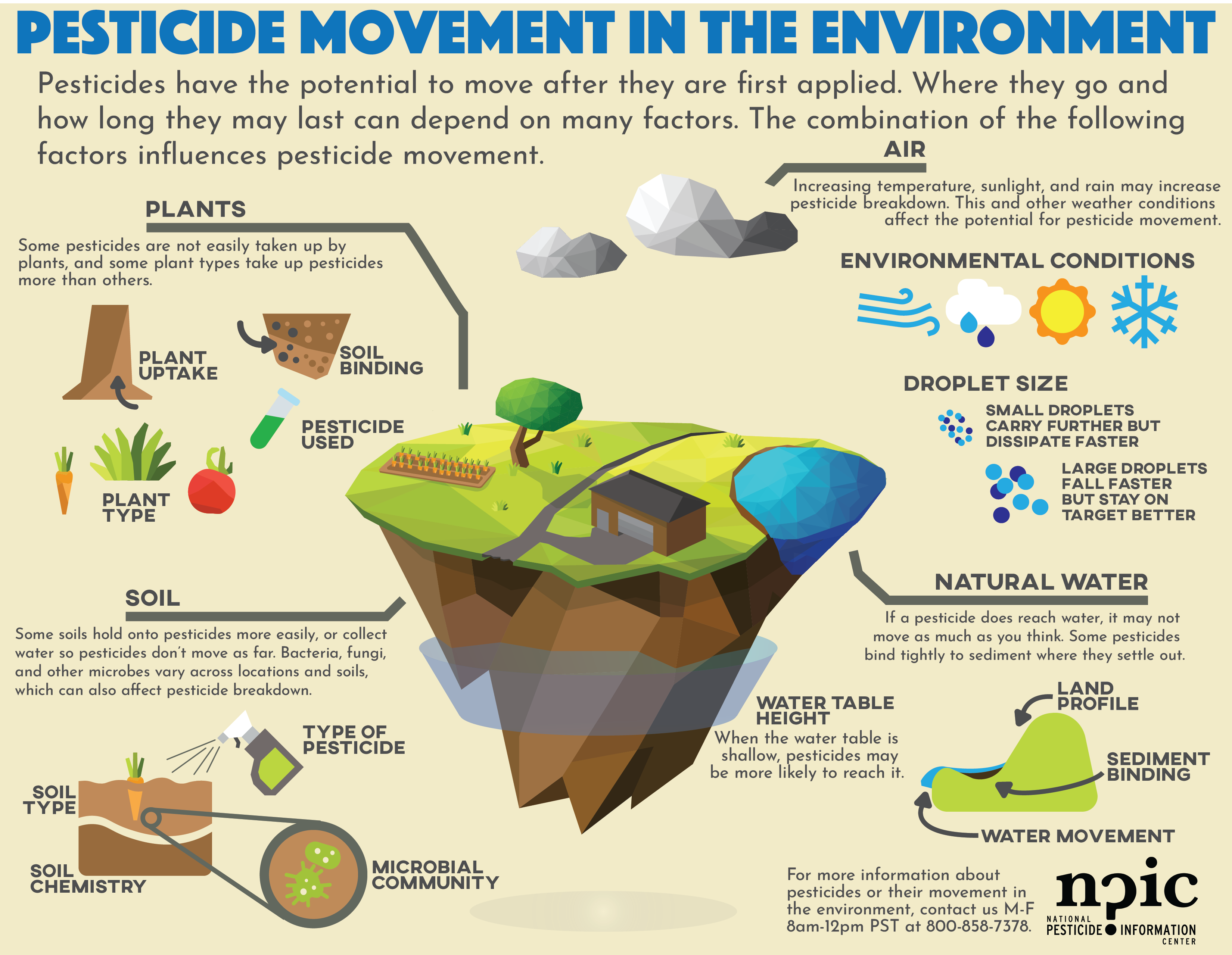
- These chemicals may move in the environment by runoff and erosion. If you have questions about risks to water, many states have private drinking water programs for more information.
- Sediment in water can hold pesticides for a long time, until disturbed.
- Topping contaminated soil with clean fill dirt may reduce exposure for children and pets in contaminated areas.
- Historical land use records for your area may inform you about possible pesticide use in the past.
- Soil testing can be very expensive and the results are often difficult to understand.
- Just because a pesticide is present in the environment does not mean there is a meaningful health risk.
- If you have unwanted stored pesticides, you can contact your local household hazardous waste, call 1-800-CLEANUP (800-253-2687), or talk to your state's environmental agency.
Additional Resources:
- Action Levels for Unavoidable Pesticide Residues in Food and Feed - Food and Drug Administration (FDA)
- Yesterday's Orchard, Today's Home: Legacy Pesticides on Former Orchard Property - Oregon State University Extension
- Guidance for Evaluating Residual Pesticides On Lands Formerly Used for Agricultural Production - Oregon Department of Environmental Quality
- Persistent Organic Pollutants: A Global Issue, A Global Response - Environmental Protection Agency (EPA)
- The 12 initial POP's under the Stockholm Convention - Stockholm Convention
Information about Specific Legacy Pesticides:
- Past Use of Chlordane, Dieldrin, and other Organochlorine Pesticides for Termite Control in Hawai'i - Hawaii State Department of Health
- Aldrin and Dieldrin: ToxFAQs - Agency for Toxic Substances and Disease Registry (ATSDR)
- Carbofuran - EXTOXNET
- Chlordane: ToxFAQs - Agency for Toxic Substances and Disease Registry (ATSDR)
- DDT - A Brief History and Status - Environmental Protection Agency (EPA)
- ToxFAQs for DDT, DDE, and DDD - Agency for Toxic Substances and Disease Registry (ATSDR)
- Endosulfan - EXTOXNET
- Heptachlor: Public Health Statement - Environmental Protection Agency (EPA)
- Hexachlorobenzene: Public Health Statement - Agency for Toxic Substances and Disease Registry (ATSDR)
- Mirex: Public Health Statement - Agency for Toxic Substances and Disease Registry (ATSDR)
- Toxaphene: Public Health Statement - Environmental Protection Agency (EPA)