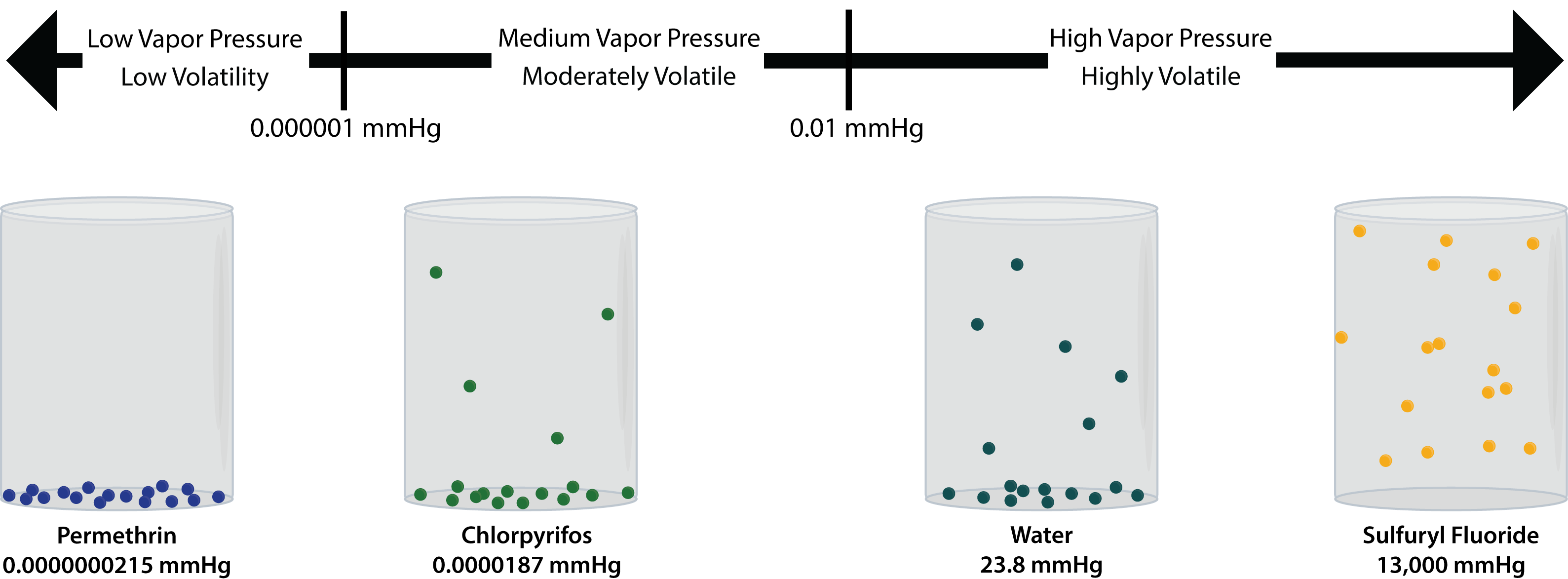
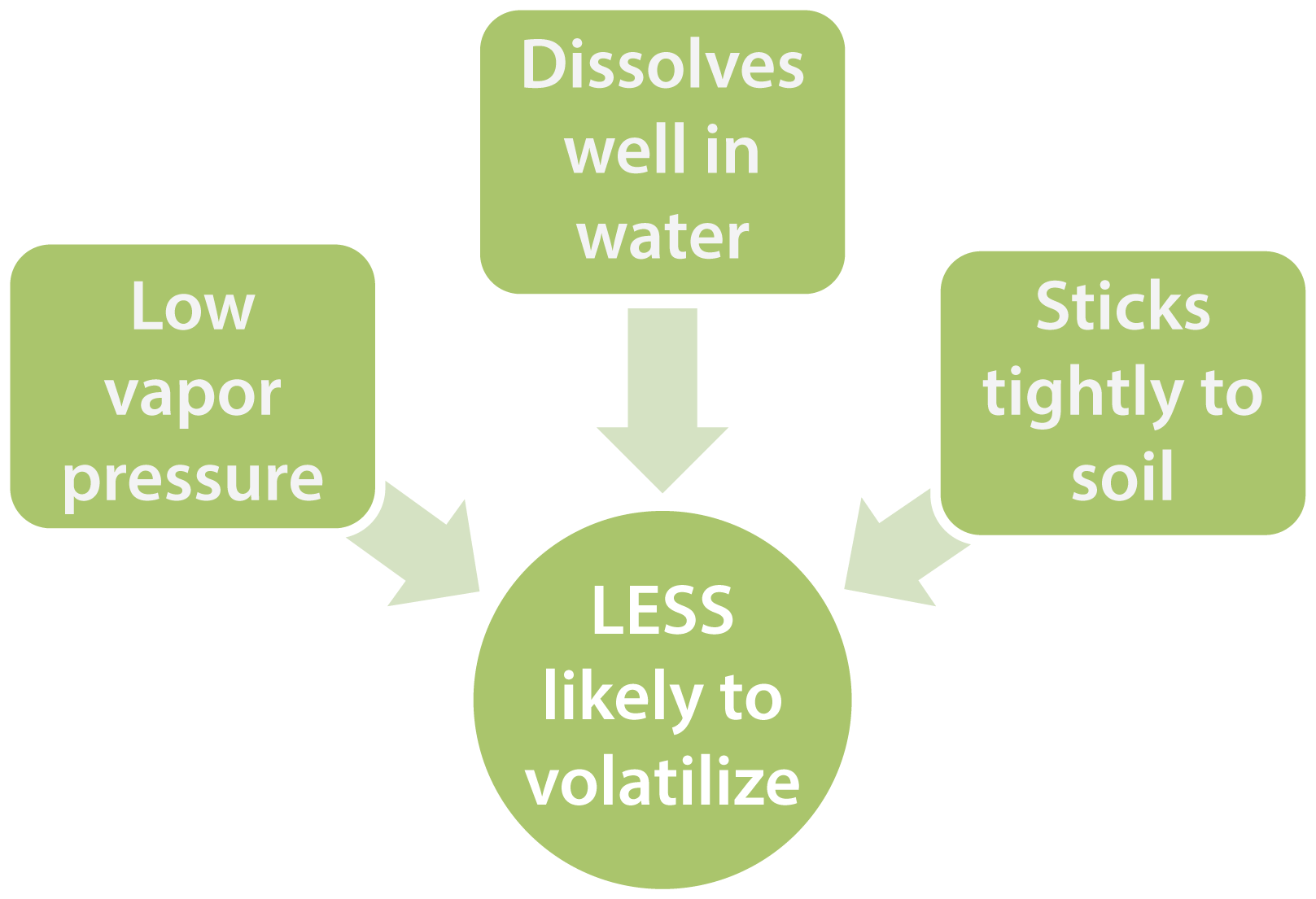
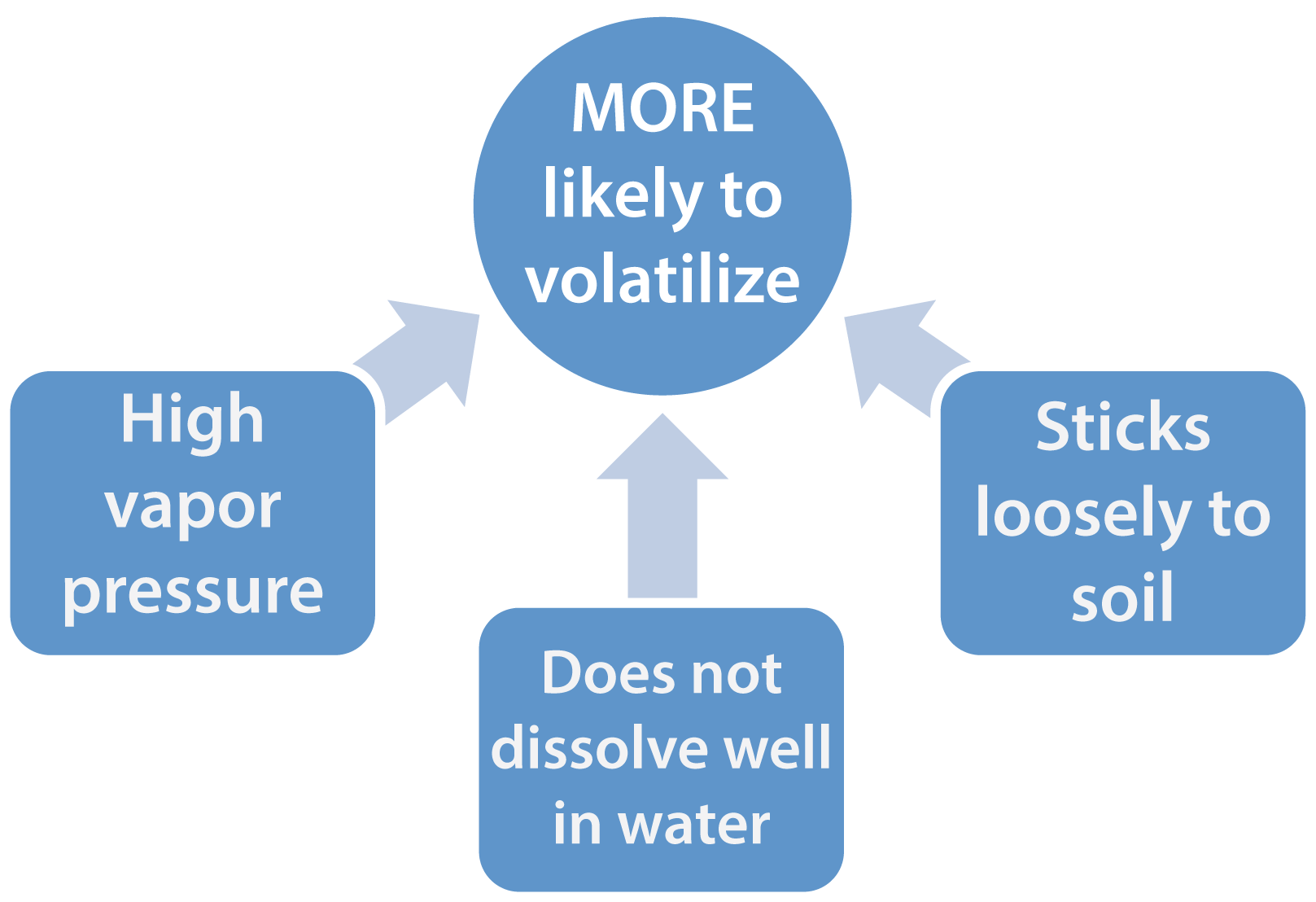
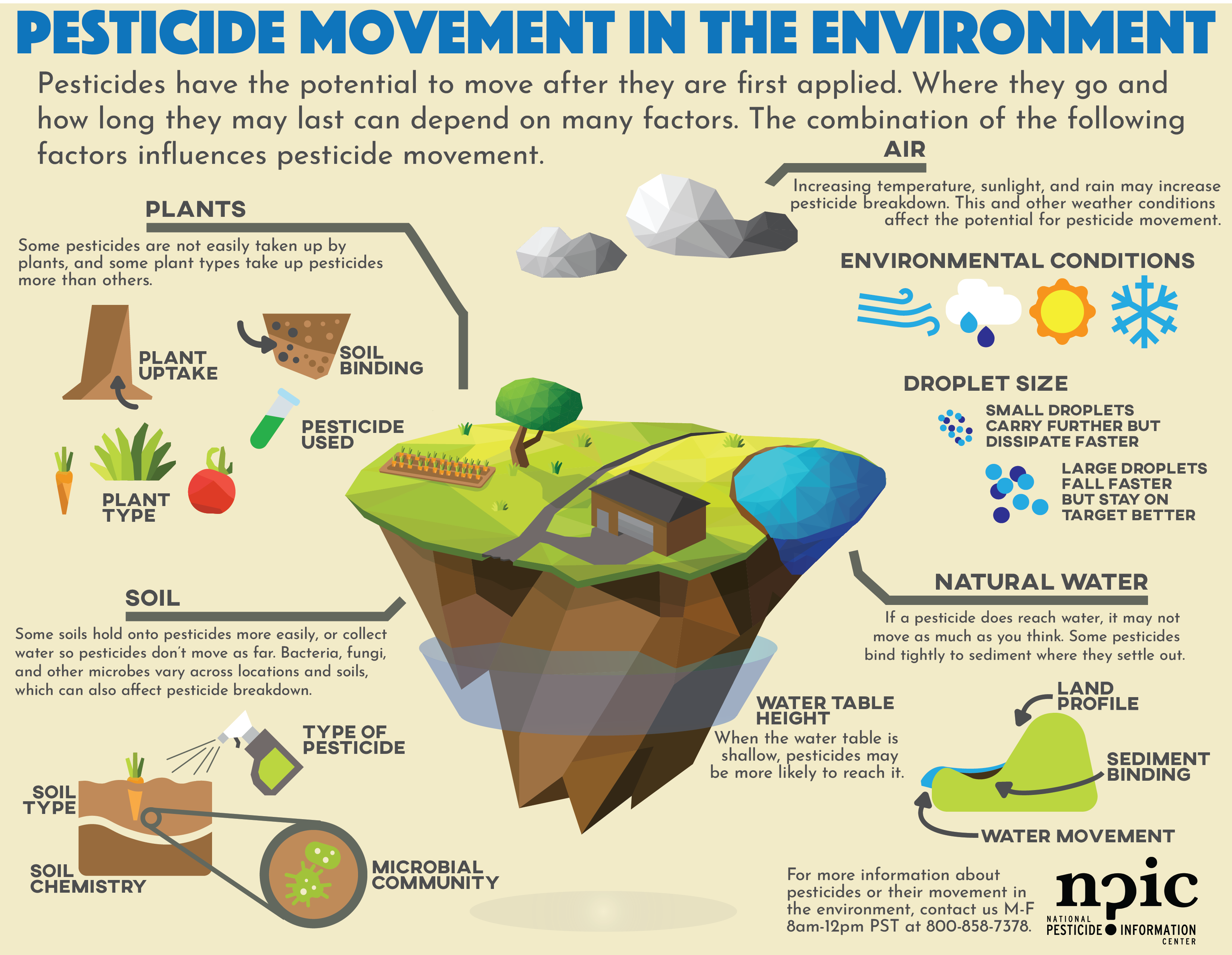
In the air, pesticides can break down, be breathed in, and move away from the treated area into new areas.7 When pesticides move off-target as vapors, that is known as vapor drift.9 Pesticide vapors can be broken apart by light, water, and microbes. They can also stick to dust particles in the air and be carried away by air currents. Later, wind or rain may deposit those airborne pesticides onto soil, water, plants, or animals in other areas.7
Becoming a vapor isn't the only way that a pesticide can move away from the place it is applied. Dust particles or spray droplets can also move through the air during or shortly after pesticide use. This is known as particle drift.9,10 Pesticide labels have information about how to reduce the risk of drift. For some products, that might mean using very specific spray nozzles, limiting the release height, or not applying under certain weather conditions. Additional methods can include adding a thickener to the spray tank, reducing the spray pressure, or using spray shields.11 If you suspect pesticide drift, contact the pesticide authority in your state.