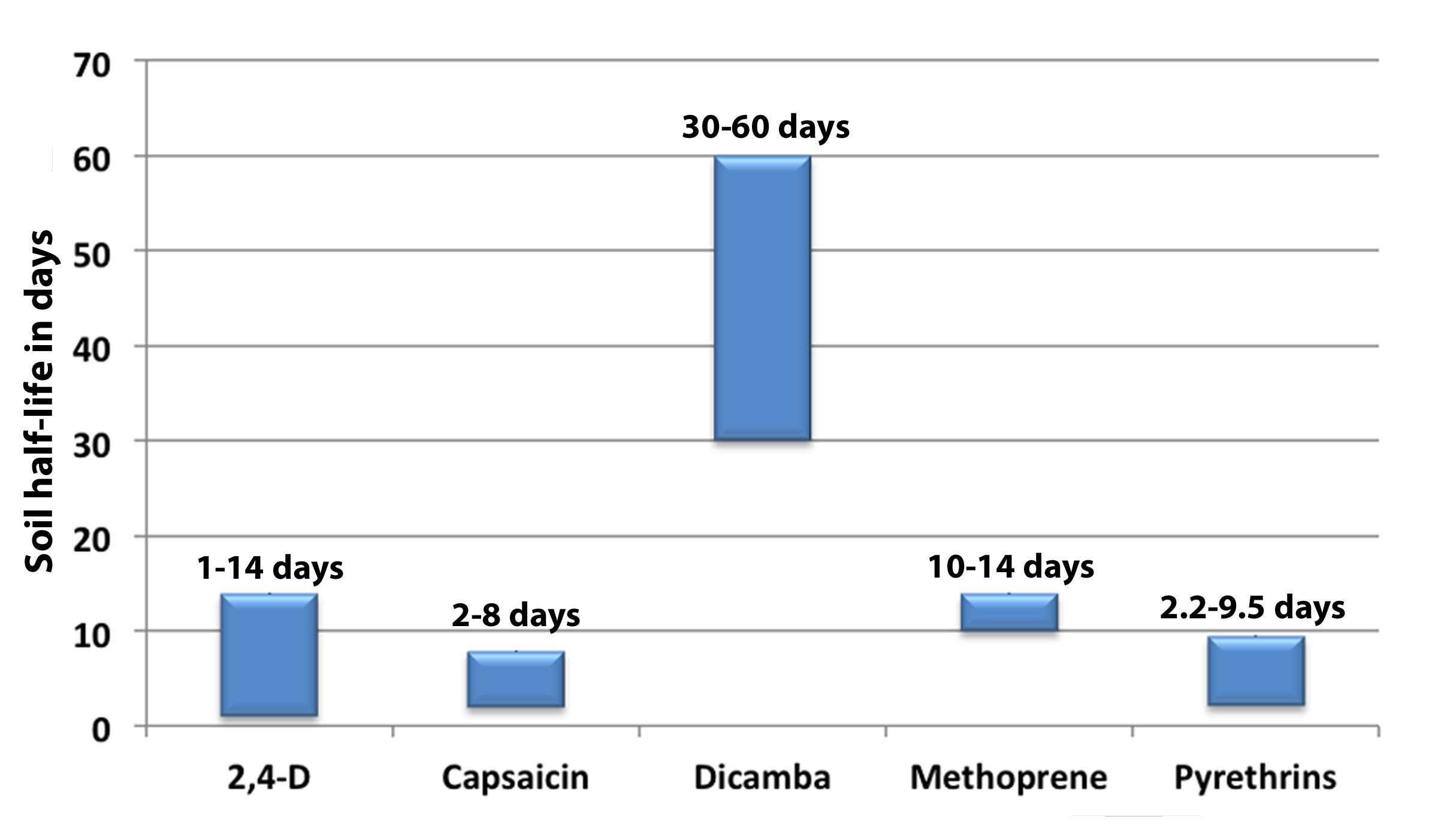
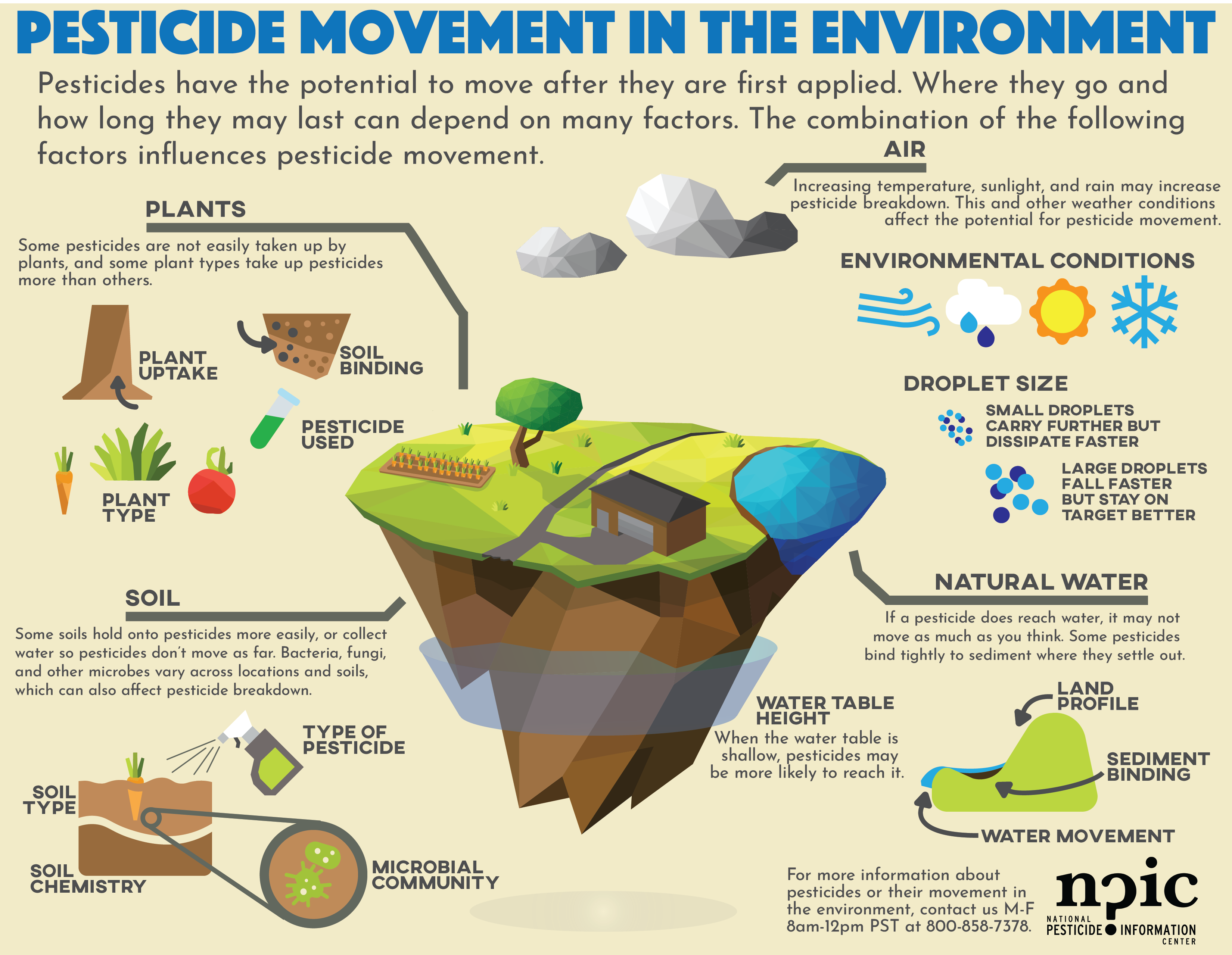
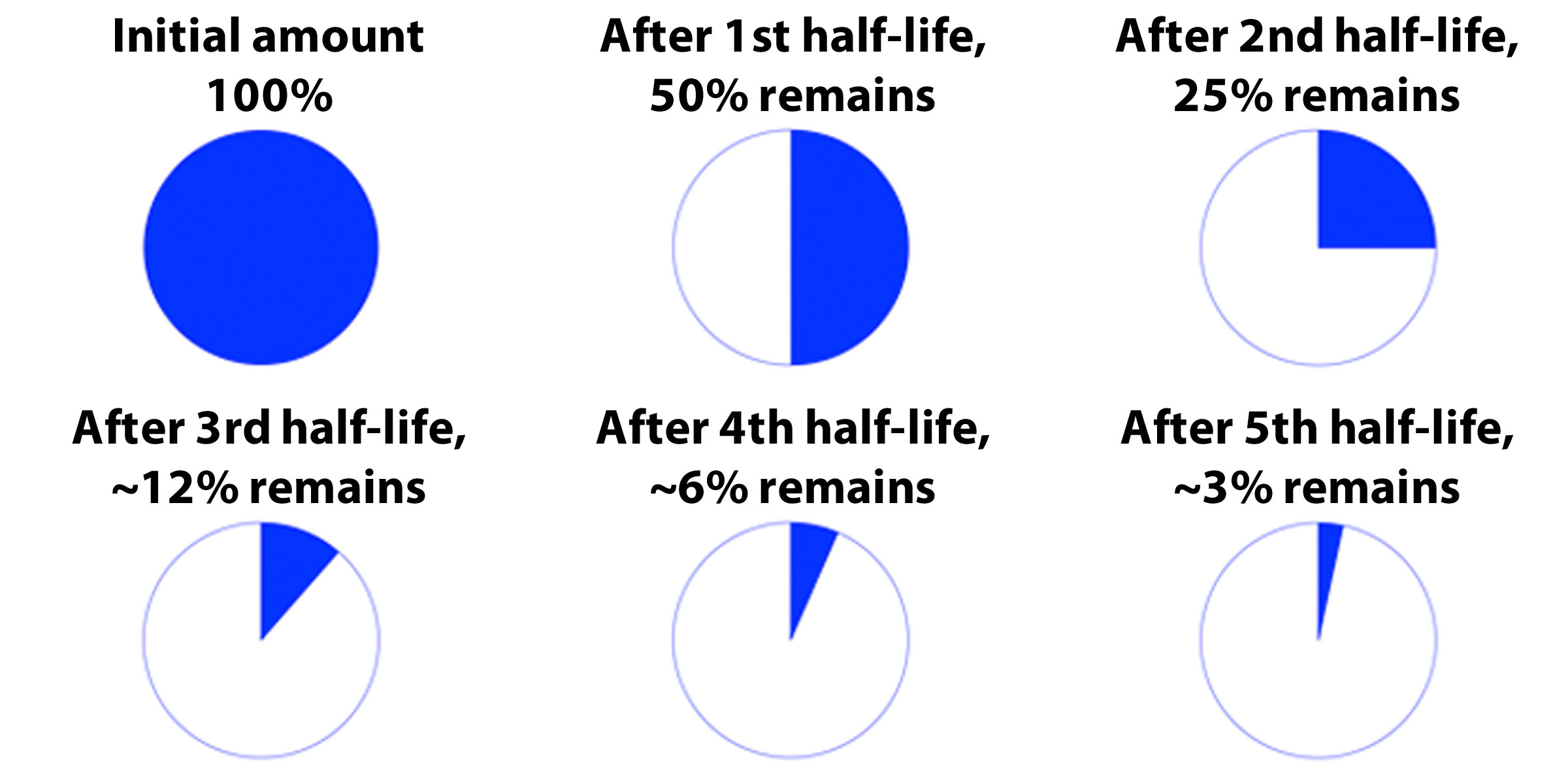
A half-life is the time it takes for a certain amount of a pesticide to be reduced by half. This occurs as it dissipates or breaks down in the environment. In general, a pesticide will break down to 50% of the original amount after a single half-life. After two half-lives, 25% will remain. About 12% will remain after three half-lives. This continues until the amount remaining is nearly zero (see figure 1).
Each pesticide can have many half-lives depending on conditions in the environment. For example, permethrin breaks down at different speeds in soil, in water, on plants, and in homes.
- In soil, the half-life of permethrin is about 40 days, ranging from 11-113 days.
- In the water column, the half-life of permethrin is 19-27 hours. If it sticks to sediment, it can last over a year.
- On plant surfaces, the half-life of permethrin ranges from 1-3 weeks, depending on the plant species.
- Indoors, the half-life of permethrin can be highly variable. It is expected to be over, or well over, 20 days.