1.800.858.7378npic@oregonstate.edu
Call, email, or chat Mon-Fri
    A to Z


Pesticides: An Introduction for Poison Control Centers

The National Pesticide Information Center (NPIC) is a service that provides science-based information about pesticides and pesticide-related topics.

  • NPIC operates a hotline and chat feature Monday through Friday.
  • The phone number is 800-858-7378. This hotline is staffed by trained Pesticide Specialists.
  • If a caller calls outside of these hours, NPIC will return their message within one business day.
  • Email us at npic@aoregonstate.edu and someone will reply to your email within one business day.
  • Find information about pesticide topics on NPIC's website: npic.orst.edu
Most of NPIC's callers are the general public, but NPIC also answers questions from doctors, veterinarians, pest control companies, and pesticide manufacturers.

Foreign Language Capability: NPIC can assist people in over 240 different languages through an over-the-phone language service.

Poison Control Center operators can refer non-emergency pesticide questions to NPIC.

  • Risks to people: short- and long-term health effects, risks for children and pregnant women, non-emergency information for health care providers
  • Risks to pets: short- and long-term health effects
  • Environmental effects: how pesticides move in the environment, effects on wildlife, effects on bees and other pollinators
  • Pesticide regulation: laws and regulation of pesticides, food safety, farmworker safety
  • Documenting incidents: when a caller wants to report something such as a workplace exposure or a bad reaction to a pesticide by a person or animal
  • Proper storage and disposal: how to store, transport, or dispose of a pesticide

  • NPIC specialists are not medically trained and cannot provide medical advice (with the exception of some veterinary medical information).
  • NPIC cannot provide immediate reporting to CDC or other health agencies.
  • NPIC has no regulatory authority and cannot conduct investigations.
  • NPIC does not make pesticide product recommendations.

You may know them as:

  • herbicides, including Weed & Feed
  • insecticides, including bug repellents
  • pet flea collars and most flea drops
  • fungicides and mold control
  • antimicrobials and disinfectants, including sanitizers used in hospitals
  • rodenticides
  • wood preservatives and more.

NPIC has health information about all of these types of products.

NPIC maintains a database of all pesticide products registered with the EPA.

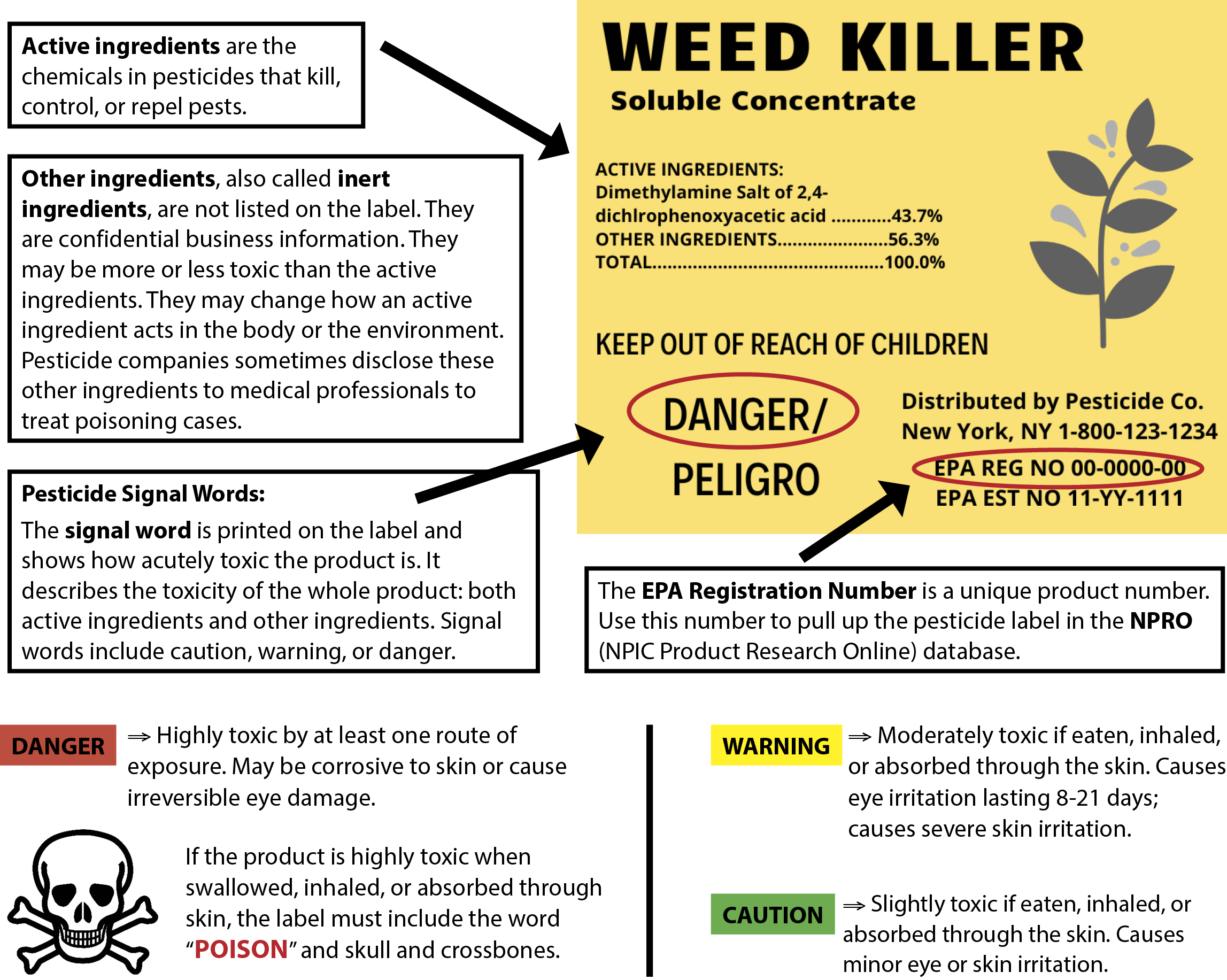
The label on a pesticide package lists the active ingredient(s), signal word, directions for use, first aid instructions, hazards to humans, pets and wildlife, environmental hazards, and more.

For more detailed information, call NPIC at 800-858-7378 (8:00am - 12:00pm PST), or email us at npic@ace.orst.edu.

Date Published: February 14, 2020

NPIC fact sheets are designed to answer questions that are commonly asked by the general public about pesticides that are regulated by the U.S. Environmental Protection Agency (US EPA). This document is intended to be educational in nature and helpful to consumers for making decisions about pesticide use.

OSU logo